
Are you and your family ready to go back to school? If your answer is "not quite yet", don't worry, you still have a few weeks of summer to enjoy!
There are several things you can do to help your child transition back into school mode. We are also busy here at GSP to prepare the learning environment for your children and are ready to welcome them back soon!
The following are excerpts from an article by the National Association of School Psychologists that might serve as helpful reminders.
Back-to-School Transitions: Tips for Parents
By Ted Feinberg, EdD, NCSP, & Katherine C. Cowan
National Association of School Psychologists
Getting a new school year off to a good start can influence children’s
attitude, confidence, and performance both socially and academically.
The transition from August to September can be difficult for both children
and parents. Even children who are eager to return to class must adjust
to the greater levels of activity, structure, and, for some, pressures
associated with school life.
The degree of adjustment depends on the child, but parents can help
their children (and the rest of the family) manage the increased pace
of life by planning ahead, being realistic, and maintaining a positive
attitude. Here are a few suggestions to help ease the transition and
promote a successful school experience.
Before School Starts
Good physical and mental health. Be sure your child is in
good physical and mental health. Schedule doctor and dental checkups
early. Discuss any concerns you have over your child’s emotional
or psychological development with your pediatrician. Your doctor can
help determine if your concerns are normal, age-appropriate issues or
require further assessment. Your child will benefit if you can identify
and begin addressing a potential issue before school starts. Schools
appreciate the efforts of parents to remedy problems as soon as they
are recognized.
Review all of the information. Review the material sent by
the school as soon as it arrives. These packets include important information
about your child’s teacher, room number, school supply requirements,
sign ups for after-school sports and activities, school calendar dates,
bus transportation, health and emergency forms, and volunteer opportunities.
Mark your calendar. Make a note of important dates, especially
back-to-school nights. This is especially important if you have children
in more than one school and need to juggle obligations. Arrange for
a babysitter now, if necessary.
Re-establish the bedtime and mealtime routines. Plan to re-establish
the bedtime and mealtime routines (especially breakfast) at least 1
week before school starts. Prepare your child for this change by talking
with your child about the benefits of school routines in terms of not
becoming over tired or overwhelmed by school work and activities. Include
pre-bedtime reading and household chores if these were suspended during
the summer.
Turn off the TV. Encourage your child to play quiet games,
do puzzles, flash cards, color, or read as early morning activities
instead of watching television. This will help ease your child into
the learning process and school routine. If possible, maintain this
practice throughout the school year. Television is distracting for many
children, and your child will arrive at school better prepared to learn
each morning if he or she has engaged in less passive activities.
Minimize clothes shopping woes. Buy only the essentials.
Summer clothes are usually fine during the early fall, but be sure to
have at least one pair of sturdy shoes. Check with your school to confirm
dress code guidelines. Common concerns include extremely short skirts
and shorts, low rise pants, bare midriffs, spaghetti strap or halter
tops, exposed undergarments, and clothing that have antisocial messages.
Designate and clear a place to do homework. Older children
should have the option of studying in their room or a quiet area of
the house. Younger children usually need an area set aside in the family
room or kitchen to facilitate adult monitoring, supervision, and encouragement.
Select a spot to keep backpacks and lunch boxes. Designate
a spot for your children to place their school belongings as well as
a place to put important notices and information sent home for you to
see. Explain that emptying their backpack each evening is part of their
responsibility, even for young children.
The First Week
Clear your own schedule. To the extent possible, postpone
business trips, volunteer meetings, and extra projects. You want to
be free to help your child acclimate to the school routine and overcome
the confusion or anxiety that many children experience at the start
of a new school year.
Make lunches the night before school. Older children should
help or make their own. Give them the option to buy lunch in school
if they prefer and finances permit.
Set alarm clocks. Have school-age children set their own
alarm clocks to get up in the morning. Praise them for prompt response
to morning schedules and bus pickups.
Leave plenty of extra time. Make sure your child has plenty
of time to get up, eat breakfast, and get to school. For very young
children taking the bus, pin to their shirt or backpack an index card
with pertinent information, including their teacher’s name and
bus number, as well as your daytime contact information.
After school. Review with your child what to do if he or
she gets home after school and you are not there. Be very specific,
particularly with young children. Put a note card in their backpack
with the name(s) and number(s) of a neighbor who is home during the
day as well as a number where you can be reached. If you have not already
done so, have your child meet neighbor contacts to reaffirm the backup
support personally.
Review your child’s schoolbooks. Talk about what your
child will be learning during the year. Share your enthusiasm for the
subjects and your confidence in your child’s ability to master
the content. Reinforce the natural progression of the learning process
that occurs over the school year. Learning skills take time and repetition.
Encourage your child to be patient, attentive, and positive.
Send a brief note to your child’s teacher. Let the
teachers know that you are interested in getting regular feedback on
how and what your child is doing in school. Be sure to attend back-to-school
night and introduce yourself to the teachers. Find out how they like
to communicate with parents (e.g., through notes, e-mail, or phone calls).
Convey a sincere desire to be a partner with your children’s teachers
to enhance their learning experience.
 Our fifth grade class traditionally embarks on an adventure at the end of the school year. This year we changed things up and sent our students on an early challenge. I have written about the importance of facing and overcoming obstacles here a few times and this topic is at the center of many discussions on NPR, education blogs and TED talks.
 We believed there is no better way than to have students face these obstacles quite literally - by visiting an aerial obstacle course. Our fifth graders were excited, but when it came to facing the obstacles it did take encouragement by the group, bravery, believe in themselves and resilience to successfully manage the course!
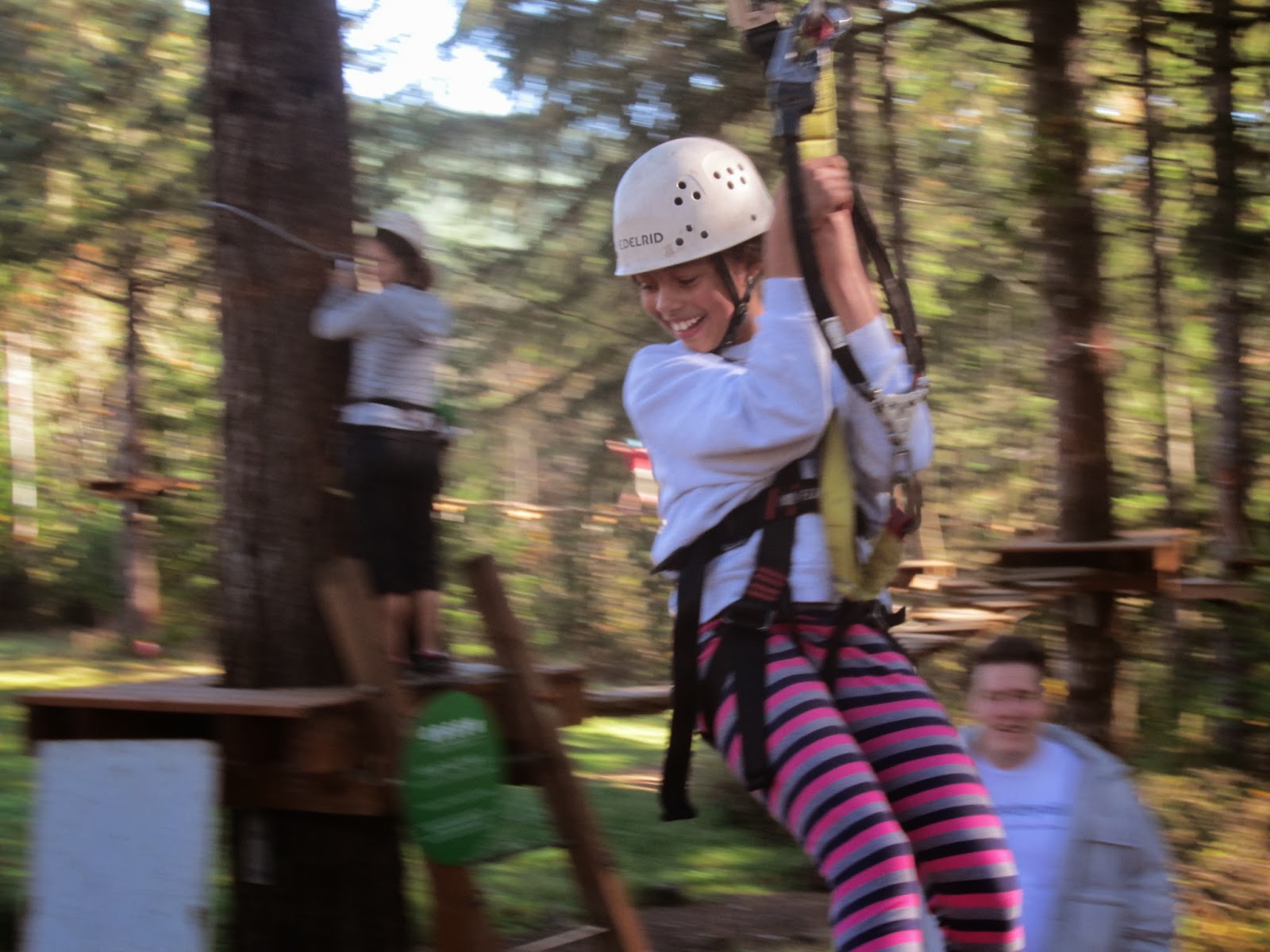 It does not take a trip to the aerial obstacle course to develop these skills (but it surely is fun!), our lives are full of small and save challenges where we as educators and parents can take a step back, or just wait a little longer before we help a child. Many times you may be surprised how much they can do, if we give them the encouragement to try one more time!


